The situation on the US-Mexico border is not showing much sign of improvement. Tens of thousands of people continue to cross the desert every year, and hundreds die, often in the most terrible and painful way possible. Poverty in Mexico, as well as the current drug violence, continues to force hundreds of thousands to make such a journey. The criminalization of migrants continues, as well as privatization of it. More and more reports of abuse by BP are being reported.
Drug violence, committed by real criminals, is beginning to spill over from Mexico into the United States. Economic and social problems such as the loss of jobs and crime are blamed on the migrants, and they are a very easy scapegoat.
So why should I care?
I want to preface the next sections by saying that I am not representing No More Deaths in what I am writing, but my own views and experiences and beliefs.
First of all, God loves these people. The cries and tears and blood and sweat being spilled in the desert does not go unnoticed by Him. The Bible says that salvation is only possible by believing in Jesus Christ, who died on the cross for our sins. He is the Son of God, through Whom God lived among us, died for us, and rose from the dead for us. Jesus said that whatever is done to "the least of these" (ie the hungry, the poor, the sick, the imprisoned, the naked) is done to Him. He also told us to hunger and thirst, and if necessary, to suffer for righteousness (justice). The plight of the men, women and children suffering and dying in the desert is His priority, and they are important to Him, even if not to others. If we believe in Him, Scripture tells us that we must live out our faith or it will be dead. Matthew 25:31-49 makes it very very clear what the implications are for choosing to close one's eyes. Those who close their eyes and ears to the suffering of other human beings and reject them, have rejected Him.
Secondly, these are our brothers and sisters in humanity. Regardless of one's religion or beliefs or worldviews, it should not be difficult to see that the fact that innocent men, women and children have been made poor and forced to leave their homes by trade policies over which they have had no control; the fact that they suffer and die from dehydration and heat and flooding and snake bites and bandit attacks; the fact they are rounded up like cattle and often denied water and food and medical care and are sworn at and abused and beaten; the fact that men and women who have been working in the US for years and have not committed crimes are separated from their wives and husbands and children; the fact that these human beings are suffering so much only because they are undocumented and poor........... it does not matter what background you come from, what you believe or don't believe, which party you vote for at election time if any... THIS IS WRONG!!!!!!! What is happening is evil. It is unjust. It is unfair. It is barbaric. You wouldn't want this to be happening to your loved ones.
Thirdly, they would not be in this situation if we hadn't allowed our leaders to do this to them. Canadians, I am writing to you as well. Don't forget that NAFTA was signed by not two, but three, countries. Canadian and American leaders, with approval from the most of us, or at least silent acquiescence, signed NAFTA with a Mexican government that perpetrated and continues to perpetrate human rights abuses and is involved in corruption- a trade deal that destroyed millions of Mexicans' lives by destroying the corn and coffee farmers, and driving down wages in a country that was already poor to begin with.
Fourthly, do not forget the lesson that history often repeats itself. A famous German pastor once wrote the following poem, after surviving imprisonment in the Dachau concentration camp during the Second World War.
First they came for the communists,
and I didn't speak out because I wasn't a communist.
Then they came for the trade unionists,
and I didn't speak out because I wasn't a trade unionist.
Then they came for the Jews,
and I didn't speak out because I wasn't a Jew.
Then they came for me
and there was no one left to speak out for me.
The fourth reason I cite should be the weakest one; we should be involved in working for justice regardless of whether or not we will ever have to face the oppression others are facing.
There are many more reasons why what is happening here is important, these are just some that came to my mind first.
What can I do?
Here are some ideas. I list them, unlike the previous ones, in no order of importance. I believe they are all equally important.
1. Support NMD and other groups working for justice on the border.
Groups like No More Deaths are always looking for support.
If you can go volunteer with them, do that. Our presence in the desert and the water drops may not seem like a lot, but to someone who is starving or severely dehydrated it may be a difference between life and death. The partnering in Nogales provides food, shelter, and support to people who have been recently deported and often have nothing. It also means the compilation of abuse reports and unveiling the violations that happen; God willing enough of an outcry will lead to changes in BP enforcement and practices.
I can also say that the people you will come across in No More Deaths are some of the friendliest, most caring, most helpful, most intense people you will meet who truly care about social justice for the people we are standing in solidarity with. I have not met one person out in the desert who I would not consider to be a best friend. In all honesty, the friendships you will make at camp will probably last you for life.
Maybe you can't physically go and volunteer with No More Deaths, or simply don't want to. You can send money or socks and clothing and GPS' and make other donations.
Maybe No More Deaths isn't your cup of tea. That's OK. You can support other groups doing similar work, like Derechos Humanos, Frontera de Cristo, Humane Borders, Samaritans. These are only some of many. Google each of these organizations and see how you can plug in. And no one will turn you away if you are not an American. Canadians, Australians and I am sure a wide variety of others have served with No More Deaths and these other groups I have listed. Justice is not a national thing.
2. Learn about your country's corporate and trade policies and how they relate to people in Mexico, as well as other developing countries in South and Central America, and the world. Research whether these agreements benefit or harm farmers, workers, planters, the indigenous peoples. Make sure that mining companies based in your country are conducting business in a fair and just manner with the people on whose land they work overseas and who labour in their factories. Call on your governments to ensure that trade deals are fair trade deals and that our corporations are held to the same standard in these places as they are to where we live.
3. Confront racism and xenophobia in your community. Remember that we are all equal.
4. Pray for justice and work for it. Be His hands and feet in our world.
Tuesday, August 2, 2011

G4S Wackenhut

G4s Wackenhut is a private security company that operates in various parts of the United States of America and Canada, as well as other parts of the world. In Winnipeg, you can see their G4S logos on the armoured cars that drive money between banks. Nothing wrong with that, if it is public money it should not be stolen. I am not sure about security measures they take to keep it out of the hands of private bankers, but that's not the issue.
In Arizona, G4S Wackenhut use their services to transport migrants en-masse back into Mexico. Border Patrol agents bring in dozens of people and dump them into these buses. Sometimes they sit there for a few minutes, sometimes a few hours. Depends on when the buses leave to Mexico. The corporation has also ran several prisons in the US, after being contracted by the government. There have been allegations of abuse in these detention centres.
NMD policy is to stop by these buses and ask the drivers if there are any migrants inside, and if so, can we offer them water and food. In several instances in the past, the drivers have said yes, and have passed down these things to the people inside. Today, we talked with three grey shirted people with the company logo on their uniform, they refused to answer whether there were people in the bus and told us to contact their superiors. We did not see anyone in the buses, although we weren't sure because the windows are darkly tinted. I hope they were empty.
What was interesting was the fact that the bus was unmarked. The logo was not on its side, unlike other times. The last time I was in Arizona, they were clearly marked with the company logo. I don't know why they were hiding it. I think it is disturbing when private corporations take part in law enforcement, especially if the enforcement targets innocent people.
God's creation (nature)
We went on some hikes yesterday and today to look for migrants on trails, as well as did some water drops. The nature in Arizona is absolutely beautiful. God is great.
It is also however terrible how American and Canadian trade and border policies have helped make it a mass graveyard for thousands of innocent Mexicans and people from South and Central America.
His gift of life and beauty has been perverted to a place of suffering and pain and death.


It is also however terrible how American and Canadian trade and border policies have helped make it a mass graveyard for thousands of innocent Mexicans and people from South and Central America.
His gift of life and beauty has been perverted to a place of suffering and pain and death.


Some other NMD volunteers

G, our media co-ordinator and one of the members of the media team. The media team may be invisible sometimes to the volunteers but they do a great job in getting the word out as to what is happening here.

C. She was one of the people who held down Byrd Camp for a few days when there were few people there. A great person to work with.

R. I got to know her a bit, we drove to camp together and went back to Tucson together. She is studying anthropology and film making but instead of making blockbusters, she is using her skills to raise awareness to human rights issues and give a voice to people who are often deprived of it.
Reverend John Fife

One of the founders of the Sanctuary Movement and No More Deaths. John's ministry has to a large part included working for righteousness and looking out for "the least of these". He is a great guy, an amazing speaker and a true Christian who lives out his faith in Jesus Christ. I wrote more about him and Jean previously when describing the Sanctuary Movement and our training. God bless him and may there be more pastors and priests like him in our world.
Sunday, July 31, 2011
Leaving Nogales
July 28
A few hours later, we left the Mexican side. We walked past the American checkpoint, where we were stopped and our passports inspected. The Customs officer, after noticing I was Canadian and with NMD people, pulled me aside and took me into the building. I told him I was with No More Deaths, because I was curious about the situation on the border and about the fact so many people are dying.
I was taken to a small office with dimly lit lights, and was told to stay there while they do a ‘background check’ on me. He took my passport and driver’s identification. My friends were told to leave, of course they refused, and stayed outside the building. I was a bit nervous, but also knew that I do not regret anything I've done with NMD and would do it again. I began praying.
After a few minutes, the officer came back and told me I can go. He noticed my cellphone, which I tried to text the volunteer co-ordinator with to let her know what was going on. He looked very angry and loudly told me to never have it on again, and that he doesn’t want to see it again. It was a bit intimidating, but nothing compared to what migrants face.

People queuing up at the US Customs, waiting to enter the United States. This is where I was briefly detained.
A few hours later, we left the Mexican side. We walked past the American checkpoint, where we were stopped and our passports inspected. The Customs officer, after noticing I was Canadian and with NMD people, pulled me aside and took me into the building. I told him I was with No More Deaths, because I was curious about the situation on the border and about the fact so many people are dying.
I was taken to a small office with dimly lit lights, and was told to stay there while they do a ‘background check’ on me. He took my passport and driver’s identification. My friends were told to leave, of course they refused, and stayed outside the building. I was a bit nervous, but also knew that I do not regret anything I've done with NMD and would do it again. I began praying.
After a few minutes, the officer came back and told me I can go. He noticed my cellphone, which I tried to text the volunteer co-ordinator with to let her know what was going on. He looked very angry and loudly told me to never have it on again, and that he doesn’t want to see it again. It was a bit intimidating, but nothing compared to what migrants face.

People queuing up at the US Customs, waiting to enter the United States. This is where I was briefly detained.
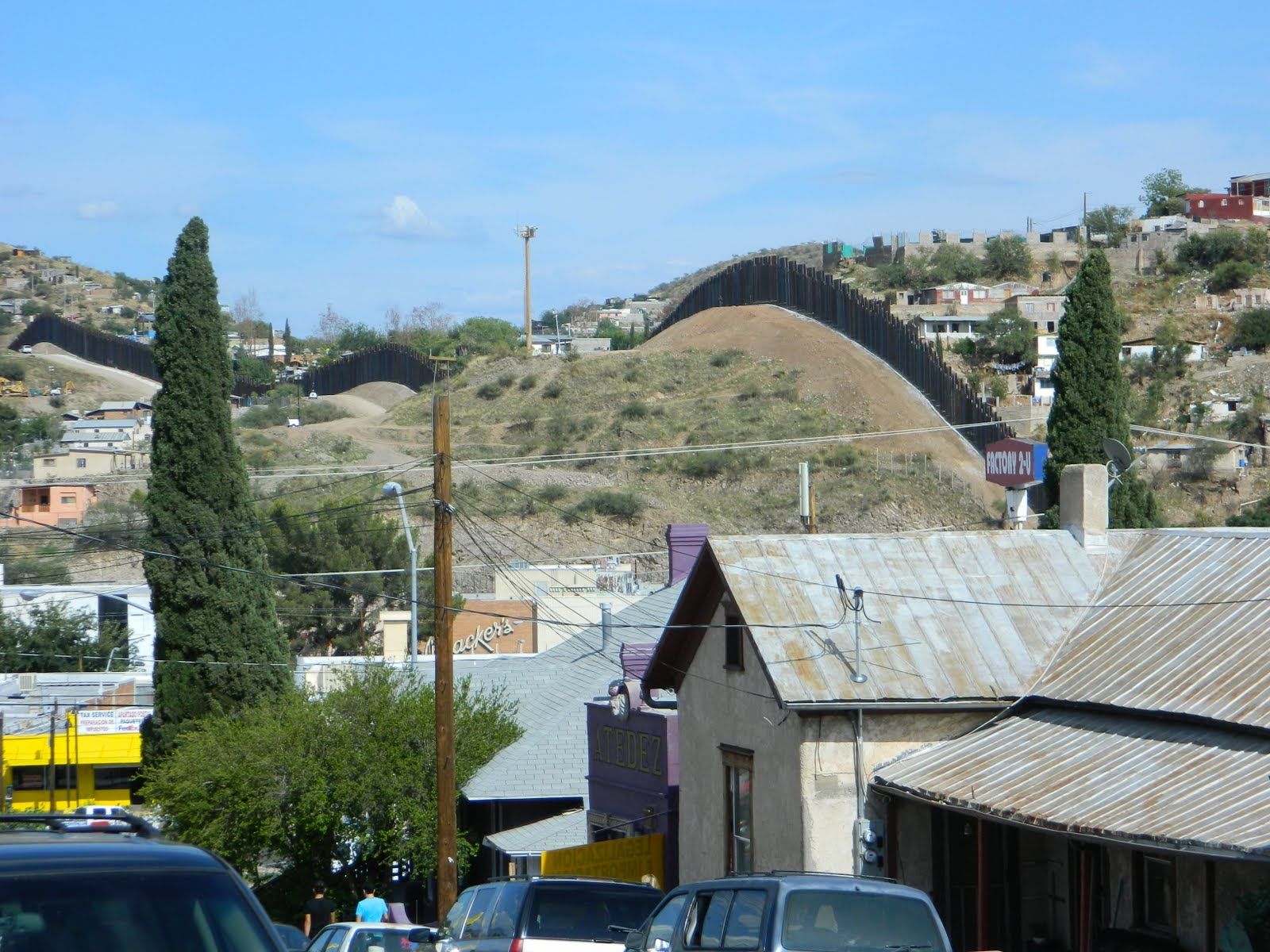
Separation barrier
I took these pictures from the American side. The white BP trucks standing by the fence are waiting for people who will try to come across.



La Violencia
One of the most disturbing things NMDers and people who work with deported migrants do is listen to testimonies of abuse. Many migrants who has been picked up by BP and deported has a story of mistreatment
As No More Deaths began working in Mexico, the volunteers would hear stories from migrants about how they were treated after being picked up by law enforcement on the American side of the border. Some were picked up and arrested by agents who saw them as fellow human beings, and who provided water and food. These people were performing a task that required them to send desperate people back to a country where they could not support themselves, yet tried to treat the people in their care as humanly as possible while carrying out their orders. I have spoken to migrants who have told me that while in custody they were fed and provided with water, and that no one hit them or insulted them or harmed them.
However, others have different stories, stories of abuse. A volunteer began compiling their testimonies, and in 2006, a report was released citing over 350 testimonies of mistreatment ranging from denial of food and water, to overcrowding in cells, to verbal and ‘mild’ ranging to severe physical and even sexual abuse. It can be read on the NMD website, and is quite chilling.
Between 2008 and 2011, volunteers began interviewing migrants and collecting stories of abuse and mistreatment. A report is due to come out halfway through September. I have been told it consists of 12,000 testimonies.
I spoke to Dave, one of NMDs long-term volunteers and who agreed to let me use his name. He has been working with group since it started, and has witnessed as well as heard stories of abuse of migrants by Border Patrol. A few years ago, Dave was driving down the highway on his way to Arivaca. He saw something something shameful and despicable. A BP agent arrested a family of seven people in the desert. It included an elderly woman, and three children aged 7 to 9 years of age in his estimation. The agent forced everyone to kneel on the hot asphalt, with their hands up behind their heads, like prisoners of war. No one was allowed to move. They stayed like this for at least ten minutes before a paddy wagon pulled up.
Dave has met migrants who have arrived from BP custody with broken limbs and fractured bones. This comes from a little game that some agents like to engage in. Arrested migrants are put into the back of a paddy wagon (also called ‘dog catchers’), where there are of course no seatbelts and people have to stand. Then the drivers ride their vehicles at fast speed over rocks, bumps, hills. It must be a thrill at the front for the officers wearing seatbelts and enjoying the view. Meanwhile, the terrified people in the back are thrown around like rag dolls. Fingers, arms, legs, ribs bruise and break as they are flung around. Sometimes air conditioning is turned on full blast, to a level where people are freezing. Other times hot air is released, to make the ride even more miserable and agony filled.
Migrants who are detained report agents calling them “putos” (bitches), “pendejos” (assholes), as well as racist terms. Often the agents doing this to them themselves are also Hispanic. Perhaps they are trying to prove their loyalty to their nation by showing they can be just as cruel as those who write laws targeting their brothers and sisters on the other side of the border.
I spoke to a migrant who reported being arrested with his friend. At the BP station, his friend was thrown to the ground by a white agent, who began kicking him in the stomach and yelling at him, calling him a “black shit”. That really offended his African American fellow officer- not that the man was being kicked, but that his fellow officer was using a slur that was offensive to members of his racial group. The agent stopped the racial insults but made sure to kick the man again before he left him alone. I spoke to another man who told me he was not mistreated.
Things are not much better in Mexico. Migrants are seen as a target of choice by a multitude of gangs, criminal networks, and now even the drug cartels have moved in. Nogales is a very dangerous place. Migrants are often kidnapped and held for ransom. Relatives living in Southern Mexico or Guatemala or other places where they are from get phone calls from the thugs demanding money for their loved ones’ release. Those whose families can pay are released, sometimes after suffering a beating. Those whose families cannot sometimes end up dead.
I remember hearing loud police siren wails and when I looked down the street, I saw five black police pick up trucks speeding by in a line. In the back, were black clothed officers clutching automatic weapons. I have never seen police this heavily armed anywhere in the world, except the West Bank. The drug cartels in Northern Mexico are extremely heavily armed and fight their wars against each other as well as against anyone who is opposed to them or suspected of being against them with Uzis, bombs, and the newest firearms. One young man I spoke to told me he fears for his life. Sicarios, hired killers, are known to open fire and machine gun people down on the streets for no explicable reason at times.
The few migrants I spoke to and asked what they think of the police all had low opinions. The police are corrupt, they said, and target the poor. It is far worse in Juarez, on the border with Texas. Whatever brutalities the cartels commit in Nogales, are magnified in Juarez. Thousands are murdered there every year. They include gang members and cartel members killed in crime wars, but also thousands of innocent bystanders who are gunned down in random attacks or killed in kidnappings. Drug rehab clinics have been sprayed with bullets. People are kidnapped and mutilated bodies are found days later on the streets, or they are simply buried in mass graves.
Juarez police officers have been known to take deported migrants aside, on pretext of having ‘wrong papers’ or just to conduct interviews. Then the victims were sold to extortion rings, who called up their families demanding ransom. Those whose loved ones could pay survived. The others didn’t.
August 24, 2010, saw the worst atrocity perpetrated against migrants to date. Seventy four men and women traveling from El Salvador, Ecuador, Brazil and Guatemala were stopped by members of the Zetas drug cartel in Tamaulipas, a province in northeastern Mexico. The migrants were ordered to smuggle drugs, and the younger men were told they would be paid $1,000 a day to be assassins for the cartel. What happened next is a testimony of heroism of the highest order. Every single one of the people refused. They were probably not naïve or ignorant of what the consequences would be of such a choice. But nevertheless their answer was unanimous- everyone said “no”. They were taken to a ranch and the shooting started. By the time the killers were finished, seventy two people lay dead. Two survived by pretending to be lifeless, and later escaped.
There are thousands and thousands of stories of tears and tragedy and inhumanity perpetrated against these people, whose only ‘crime’ is wanting a better life.
As No More Deaths began working in Mexico, the volunteers would hear stories from migrants about how they were treated after being picked up by law enforcement on the American side of the border. Some were picked up and arrested by agents who saw them as fellow human beings, and who provided water and food. These people were performing a task that required them to send desperate people back to a country where they could not support themselves, yet tried to treat the people in their care as humanly as possible while carrying out their orders. I have spoken to migrants who have told me that while in custody they were fed and provided with water, and that no one hit them or insulted them or harmed them.
However, others have different stories, stories of abuse. A volunteer began compiling their testimonies, and in 2006, a report was released citing over 350 testimonies of mistreatment ranging from denial of food and water, to overcrowding in cells, to verbal and ‘mild’ ranging to severe physical and even sexual abuse. It can be read on the NMD website, and is quite chilling.
Between 2008 and 2011, volunteers began interviewing migrants and collecting stories of abuse and mistreatment. A report is due to come out halfway through September. I have been told it consists of 12,000 testimonies.
I spoke to Dave, one of NMDs long-term volunteers and who agreed to let me use his name. He has been working with group since it started, and has witnessed as well as heard stories of abuse of migrants by Border Patrol. A few years ago, Dave was driving down the highway on his way to Arivaca. He saw something something shameful and despicable. A BP agent arrested a family of seven people in the desert. It included an elderly woman, and three children aged 7 to 9 years of age in his estimation. The agent forced everyone to kneel on the hot asphalt, with their hands up behind their heads, like prisoners of war. No one was allowed to move. They stayed like this for at least ten minutes before a paddy wagon pulled up.
Dave has met migrants who have arrived from BP custody with broken limbs and fractured bones. This comes from a little game that some agents like to engage in. Arrested migrants are put into the back of a paddy wagon (also called ‘dog catchers’), where there are of course no seatbelts and people have to stand. Then the drivers ride their vehicles at fast speed over rocks, bumps, hills. It must be a thrill at the front for the officers wearing seatbelts and enjoying the view. Meanwhile, the terrified people in the back are thrown around like rag dolls. Fingers, arms, legs, ribs bruise and break as they are flung around. Sometimes air conditioning is turned on full blast, to a level where people are freezing. Other times hot air is released, to make the ride even more miserable and agony filled.
Migrants who are detained report agents calling them “putos” (bitches), “pendejos” (assholes), as well as racist terms. Often the agents doing this to them themselves are also Hispanic. Perhaps they are trying to prove their loyalty to their nation by showing they can be just as cruel as those who write laws targeting their brothers and sisters on the other side of the border.
I spoke to a migrant who reported being arrested with his friend. At the BP station, his friend was thrown to the ground by a white agent, who began kicking him in the stomach and yelling at him, calling him a “black shit”. That really offended his African American fellow officer- not that the man was being kicked, but that his fellow officer was using a slur that was offensive to members of his racial group. The agent stopped the racial insults but made sure to kick the man again before he left him alone. I spoke to another man who told me he was not mistreated.
Things are not much better in Mexico. Migrants are seen as a target of choice by a multitude of gangs, criminal networks, and now even the drug cartels have moved in. Nogales is a very dangerous place. Migrants are often kidnapped and held for ransom. Relatives living in Southern Mexico or Guatemala or other places where they are from get phone calls from the thugs demanding money for their loved ones’ release. Those whose families can pay are released, sometimes after suffering a beating. Those whose families cannot sometimes end up dead.
I remember hearing loud police siren wails and when I looked down the street, I saw five black police pick up trucks speeding by in a line. In the back, were black clothed officers clutching automatic weapons. I have never seen police this heavily armed anywhere in the world, except the West Bank. The drug cartels in Northern Mexico are extremely heavily armed and fight their wars against each other as well as against anyone who is opposed to them or suspected of being against them with Uzis, bombs, and the newest firearms. One young man I spoke to told me he fears for his life. Sicarios, hired killers, are known to open fire and machine gun people down on the streets for no explicable reason at times.
The few migrants I spoke to and asked what they think of the police all had low opinions. The police are corrupt, they said, and target the poor. It is far worse in Juarez, on the border with Texas. Whatever brutalities the cartels commit in Nogales, are magnified in Juarez. Thousands are murdered there every year. They include gang members and cartel members killed in crime wars, but also thousands of innocent bystanders who are gunned down in random attacks or killed in kidnappings. Drug rehab clinics have been sprayed with bullets. People are kidnapped and mutilated bodies are found days later on the streets, or they are simply buried in mass graves.
Juarez police officers have been known to take deported migrants aside, on pretext of having ‘wrong papers’ or just to conduct interviews. Then the victims were sold to extortion rings, who called up their families demanding ransom. Those whose loved ones could pay survived. The others didn’t.
August 24, 2010, saw the worst atrocity perpetrated against migrants to date. Seventy four men and women traveling from El Salvador, Ecuador, Brazil and Guatemala were stopped by members of the Zetas drug cartel in Tamaulipas, a province in northeastern Mexico. The migrants were ordered to smuggle drugs, and the younger men were told they would be paid $1,000 a day to be assassins for the cartel. What happened next is a testimony of heroism of the highest order. Every single one of the people refused. They were probably not naïve or ignorant of what the consequences would be of such a choice. But nevertheless their answer was unanimous- everyone said “no”. They were taken to a ranch and the shooting started. By the time the killers were finished, seventy two people lay dead. Two survived by pretending to be lifeless, and later escaped.
There are thousands and thousands of stories of tears and tragedy and inhumanity perpetrated against these people, whose only ‘crime’ is wanting a better life.
Some services offered in Nogales

Bus station. The migrants are sitting underneath the roof, the area is much bigger than it looks. From here, people also make phone calls to families and loved ones on phones provided by No More Deaths.

Comedora
Nogales NMDers
Some of these people volunteer in Nogales for a few weeks, and then return to their homes, like myself. Others have been doing this for years. They are fluent or near fluent in Spanish, and come by with a host of other skills as well. In addition to helping in the various projects run by Mexican NGOs, they also compile abuse testimonies and try to reclaim confiscated items from Border Patrol. They make a big difference too.

L and D.

Steve

L and D.

Steve
Making a difference

This guy used to live and work in America since he was brought in when he was three years old. ICE caught him and deported him. He decided to stay in Nogales and serve people who have been deported. He helps run things in the bus station.

This man is a barber and comes to the camp to offer his services for free. He also is a great musician, and played his guitar for the people.
These guys are the real heroes. They serve their countrymen and other people from Latin and South America who have suffered through hell. They are there on a daily basis, giving their time and talents to make a difference. Both men have given permission for their pictures to be taken and displayed on here.
Nogales
July 28
We arrive in Mexico. I go with M and V. V is the volunteer co-ordinator, and agreed to give us a tour. There we meet several other volunteers who have been working there.
Nogales is a city of approximately 159,000 people, and on the border with the United States. We cross from the American side to the Mexican side. Walking through the gate, no one checks our passports. We only see the Nogales that is close to the American side but it is quite an experience. Tacquito stands are set up along the street. There is a graveyard that is so colourfully decorated sometimes it’s hard to associate with a place of death. Houses dot the surrounding hills. Mexico is a beautiful country with beautiful people, yet also one with a lot of suffering. An estimated 44.2 percent of its population live in poverty. 10.2 percent live in extreme poverty. It is also the second richest country in Latin and South America.
Nogales is also one of the cities in Mexico in which deported migrants are dropped off by the US Border Patrol. Some have been caught that very same day and deported. Others have been sitting in prison for weeks and months. The deportees come in all ages, shapes and sizes; men, women and children. I see kids who can’t be more than 6 years old clutching on to their mothers in one of the centers.
They are dropped off from large Wackenhut buses, left completely on their own. Not infrequently, their belongings are taken away in BP or ICE custody- wallets, shoelaces, id. Money often goes missing.
NMD began partnering up with Mexican NGOs to try to provide some relief for the hundreds who are dropped off here everyday. According to Steve, one of NMD’s long-term volunteers; Currently, an estimated 250 people are deported from the US to Nogales every day. Only a few years ago, it was 800 to 1200.
Some of the deportees get to go to a comedora- a soup kitchen- which was started with help of the Catholic Church. There is room for 70 people in the morning and 70 in the afternoon, about 140 people use it everyday. Then people are taken In for a few days by a program ran by the Mexican government, Grupo Beta, which provides people a few days to 2 weeks of shelter as they try to regain their bearings and decide where to go next. Many of the deportees have lived in the US for several years, and their whole lives are behind them. Others paid a lot of saved up money to get to the US so they could work to support folks back home, now they are back at square one.
What really impresses me is the fact that NMD is there only in a supporting role. The people who are co-ordinating the work and are in charge are Mexicans. So are most of the volunteers. We are supporting them, and send volunteers over to help serve food, assist people in making phone calls to their loved ones, give some medical help. But they are the ones in charge, helping their countrymen and women. They give their time willingly and without asking for any money in return for their help.
There is a bus station that offers bus rides to various parts of Mexico for those who want to go back, and the rates are low. Shockingly, for me, most of the people who were recently deported intend to try crossing the desert again. Some have survived near death but are ready and willing to enter this hell again.
One of the things that most stands out for me is the wall. It is an ugly metal structure that runs through the city and separates the Mexican side from the American side. On one side are hundreds of thousands of people who, in spite of their best efforts, have been pushed to poverty by economic forces and problems created in part by their leaders and in part by the leaders on the other side of the fence. Where they know there are jobs that pay a living wage. Where many have families.
Strung out every few hundred metres along the fence, on the other side, are Border Patrol vehicles waiting and ready to catch anyone who tries to cross. Pictures to come later.

Cars driving into the States from Mexico. You can see the street vendors at work.

Nogales street view

Just before entering Mexico
We arrive in Mexico. I go with M and V. V is the volunteer co-ordinator, and agreed to give us a tour. There we meet several other volunteers who have been working there.
Nogales is a city of approximately 159,000 people, and on the border with the United States. We cross from the American side to the Mexican side. Walking through the gate, no one checks our passports. We only see the Nogales that is close to the American side but it is quite an experience. Tacquito stands are set up along the street. There is a graveyard that is so colourfully decorated sometimes it’s hard to associate with a place of death. Houses dot the surrounding hills. Mexico is a beautiful country with beautiful people, yet also one with a lot of suffering. An estimated 44.2 percent of its population live in poverty. 10.2 percent live in extreme poverty. It is also the second richest country in Latin and South America.
Nogales is also one of the cities in Mexico in which deported migrants are dropped off by the US Border Patrol. Some have been caught that very same day and deported. Others have been sitting in prison for weeks and months. The deportees come in all ages, shapes and sizes; men, women and children. I see kids who can’t be more than 6 years old clutching on to their mothers in one of the centers.
They are dropped off from large Wackenhut buses, left completely on their own. Not infrequently, their belongings are taken away in BP or ICE custody- wallets, shoelaces, id. Money often goes missing.
NMD began partnering up with Mexican NGOs to try to provide some relief for the hundreds who are dropped off here everyday. According to Steve, one of NMD’s long-term volunteers; Currently, an estimated 250 people are deported from the US to Nogales every day. Only a few years ago, it was 800 to 1200.
Some of the deportees get to go to a comedora- a soup kitchen- which was started with help of the Catholic Church. There is room for 70 people in the morning and 70 in the afternoon, about 140 people use it everyday. Then people are taken In for a few days by a program ran by the Mexican government, Grupo Beta, which provides people a few days to 2 weeks of shelter as they try to regain their bearings and decide where to go next. Many of the deportees have lived in the US for several years, and their whole lives are behind them. Others paid a lot of saved up money to get to the US so they could work to support folks back home, now they are back at square one.
What really impresses me is the fact that NMD is there only in a supporting role. The people who are co-ordinating the work and are in charge are Mexicans. So are most of the volunteers. We are supporting them, and send volunteers over to help serve food, assist people in making phone calls to their loved ones, give some medical help. But they are the ones in charge, helping their countrymen and women. They give their time willingly and without asking for any money in return for their help.
There is a bus station that offers bus rides to various parts of Mexico for those who want to go back, and the rates are low. Shockingly, for me, most of the people who were recently deported intend to try crossing the desert again. Some have survived near death but are ready and willing to enter this hell again.
One of the things that most stands out for me is the wall. It is an ugly metal structure that runs through the city and separates the Mexican side from the American side. On one side are hundreds of thousands of people who, in spite of their best efforts, have been pushed to poverty by economic forces and problems created in part by their leaders and in part by the leaders on the other side of the fence. Where they know there are jobs that pay a living wage. Where many have families.
Strung out every few hundred metres along the fence, on the other side, are Border Patrol vehicles waiting and ready to catch anyone who tries to cross. Pictures to come later.

Cars driving into the States from Mexico. You can see the street vendors at work.

Nogales street view

Just before entering Mexico
Some more NMDers (2)

R, one of the funniest people in camp and a guy who is really passionate about the human rights of the migrants and other victims of injustice in Arizona. On that day, R switched clothes with a female member. She didn't want a picture taken though.

J, one of our volunteers.
Some more NMDers

J and I at Byrd Camp, July 27

D, one of the medically trained volunteers. He also serves up great breakfasts.

Mac, one of our cooks. He is a high school teacher in Texas and doesn't go to camp with us, but prepares meals for people who are training.
Saturday, July 30, 2011
Remembering Josseline
July 26
On July 26th, I have had the oppurtunity to visit the memorial of Josseline. It is in the mountains, 7 miles from the border with Mexico. It is on one of the many trails migrants walk on, one of many on which countless people have spilled blood, sweat and tears.
Her story is sadly one of thousands, and stands as a stark reminder that things have to change.
Josseline Jamileth Hernández Quinteros was a 15 year old girl from Honduras who was one of the many thousands crossing the border into the United States. A teenager just entering high school, she took her ten year old brother and traveled with him to get to their mother who was living in Los Angeles.
They survived the harrowing dangers in Mexico, where migrants are victims of exraordinary violence and cruelty from law enforcement and gangs; and began crossing the desert with a group of people in January 2008. They got to the mountains, but there, Josseline fell sick. The 7 miles of walking took their toll on her body, and she was dehydrated. She began vomiting and was unable to keep up with the group.
The group needed to move on, the coyote decided to leave her. Her younger brother wanted to stay with her, but she urged him on.
Exposed to the weather and shivering from the cold, Josseline was left alone with some water and food. On her first night, the temperature dropped below zero. It is unknown how many days and nights she lasted. One can only hope her death came quickly.
Josseline's body was found several weeks later by Dan Millis, a No More Deaths volunteer who was hiking through the area. Her mother and brother could not come to her funeral, because there was no guarantee they would not be arrested and deported. Griefstricken relatives and others who heard of what happened followed the priest into the mountains, where the memorial service was held at the site of her death.
The death of anyone is tragic, but particularly when the victim is a child. Josseline had absolutely no say regarding economic, political or immigration policies that forced her and her family into such a journey. Yet she has joined the thousands of innocents who have lost their lives in the desert.
I could not help thinking of the migrants who were in our camp- especially two of the boys who were 15 and 16 years of age. Not any different from the students I worked with as a substitute teacher at Garden City or Miles Mac or St Boniface Archdiocesan high schools. Like my former grade 8s who I taught at FAMS.
No one deserves to die like this.
I believe Josseline is with God and will never experience pain or suffering or poverty or dying again. His Kingdom come, His will be done on earth as it is in Heaven.
We need to be engaged in working for His Kingdom down here.
*Josseline's story is told also in a book written by Margaret Regan, The Death of Josseline. It is about the plight of migrants crossing through Arizona. I would highly recommend getting hold of a copy and reading it.


Josseline's mother wrote this poem for her daughter, and it can be seen by the memorial. Translation from "The Death of Josseline" by Margaret Regan.
"When you feel that the road has turned hard and difficult / Don't give yourself up as lost / Continue forward and seek God's help."
"We'll carry you always in our hearts"
On July 26th, I have had the oppurtunity to visit the memorial of Josseline. It is in the mountains, 7 miles from the border with Mexico. It is on one of the many trails migrants walk on, one of many on which countless people have spilled blood, sweat and tears.
Her story is sadly one of thousands, and stands as a stark reminder that things have to change.
Josseline Jamileth Hernández Quinteros was a 15 year old girl from Honduras who was one of the many thousands crossing the border into the United States. A teenager just entering high school, she took her ten year old brother and traveled with him to get to their mother who was living in Los Angeles.
They survived the harrowing dangers in Mexico, where migrants are victims of exraordinary violence and cruelty from law enforcement and gangs; and began crossing the desert with a group of people in January 2008. They got to the mountains, but there, Josseline fell sick. The 7 miles of walking took their toll on her body, and she was dehydrated. She began vomiting and was unable to keep up with the group.
The group needed to move on, the coyote decided to leave her. Her younger brother wanted to stay with her, but she urged him on.
Exposed to the weather and shivering from the cold, Josseline was left alone with some water and food. On her first night, the temperature dropped below zero. It is unknown how many days and nights she lasted. One can only hope her death came quickly.
Josseline's body was found several weeks later by Dan Millis, a No More Deaths volunteer who was hiking through the area. Her mother and brother could not come to her funeral, because there was no guarantee they would not be arrested and deported. Griefstricken relatives and others who heard of what happened followed the priest into the mountains, where the memorial service was held at the site of her death.
The death of anyone is tragic, but particularly when the victim is a child. Josseline had absolutely no say regarding economic, political or immigration policies that forced her and her family into such a journey. Yet she has joined the thousands of innocents who have lost their lives in the desert.
I could not help thinking of the migrants who were in our camp- especially two of the boys who were 15 and 16 years of age. Not any different from the students I worked with as a substitute teacher at Garden City or Miles Mac or St Boniface Archdiocesan high schools. Like my former grade 8s who I taught at FAMS.
No one deserves to die like this.
I believe Josseline is with God and will never experience pain or suffering or poverty or dying again. His Kingdom come, His will be done on earth as it is in Heaven.
We need to be engaged in working for His Kingdom down here.
*Josseline's story is told also in a book written by Margaret Regan, The Death of Josseline. It is about the plight of migrants crossing through Arizona. I would highly recommend getting hold of a copy and reading it.


Josseline's mother wrote this poem for her daughter, and it can be seen by the memorial. Translation from "The Death of Josseline" by Margaret Regan.
"When you feel that the road has turned hard and difficult / Don't give yourself up as lost / Continue forward and seek God's help."
"We'll carry you always in our hearts"
Elusive Trail
July 26
On my last day in the desert, 2 volunteers and I went to make some water drops and check out a new trail. We got so lost it wasn't all funny, and were wandering around in circles. We climbed over rocks, got scraped, almost slipped... and the car was in plain sight!!! We were unable to find the trail we were looking for until there was like 30 minutes left and we noticed it was much closer to the car then where we wandered off.
It was kind of scary, because we were in an area where a mountain lion was sighted recently. We saw some bones and skulls of several animals, including a deer. We decided to beat a hasty retreat. It was not fun at all...

Deer skull.

A view from the rocks. There was rain there recently, and a small lake formed. It is very shallow and has probably dried up by now.

The trail we were actually looking for...
On my last day in the desert, 2 volunteers and I went to make some water drops and check out a new trail. We got so lost it wasn't all funny, and were wandering around in circles. We climbed over rocks, got scraped, almost slipped... and the car was in plain sight!!! We were unable to find the trail we were looking for until there was like 30 minutes left and we noticed it was much closer to the car then where we wandered off.
It was kind of scary, because we were in an area where a mountain lion was sighted recently. We saw some bones and skulls of several animals, including a deer. We decided to beat a hasty retreat. It was not fun at all...

Deer skull.

A view from the rocks. There was rain there recently, and a small lake formed. It is very shallow and has probably dried up by now.

The trail we were actually looking for...
Attack of the javelinas
July 23
A javelina is a wild pig that lives in the deserts of Arizona. They travel in packs and go looking for food. They aren't aggressive but whatever is left lying around is fair game. You can hear them at night, and they run into the camp. Whatever edible thing is not buried or covered with a lid... that better have a really heavy rock on it...is gone the next morning.
We put our compost into holes we have dug in the ground so these buggers don't get in... but it doesn't always work. I dug the following pit on July 23 and made sure to cover all of the rotting food with plenty of soil and really large rocks... but they managed to dig it up and left a huge mess that I had to dig over again.
I haven't managed to see one of these, although other volunteers have, so I will copy a link to a site where you can see a picture of one of these slobby food-raiding barbarians. Oh yeah, I was ticked.
http://en.wikipedia.org/wiki/File:Javelina.jpg
They are also called peccaries, or "skunk pigs". Personally, I think that is too generous of a name for these guys. I would call them something else, but it wouldn't be appropriate for the blog.

Compost pit before I began digging.

Compost pit, after I have finished covering it up.

Te swinie!!!! If you don't understand what that means, find a friend who is Polish and have him or her translate that for you. OK, I'll do it. It means "these pigs!!!"
A javelina is a wild pig that lives in the deserts of Arizona. They travel in packs and go looking for food. They aren't aggressive but whatever is left lying around is fair game. You can hear them at night, and they run into the camp. Whatever edible thing is not buried or covered with a lid... that better have a really heavy rock on it...is gone the next morning.
We put our compost into holes we have dug in the ground so these buggers don't get in... but it doesn't always work. I dug the following pit on July 23 and made sure to cover all of the rotting food with plenty of soil and really large rocks... but they managed to dig it up and left a huge mess that I had to dig over again.
I haven't managed to see one of these, although other volunteers have, so I will copy a link to a site where you can see a picture of one of these slobby food-raiding barbarians. Oh yeah, I was ticked.
http://en.wikipedia.org/wiki/File:Javelina.jpg
They are also called peccaries, or "skunk pigs". Personally, I think that is too generous of a name for these guys. I would call them something else, but it wouldn't be appropriate for the blog.

Compost pit before I began digging.

Compost pit, after I have finished covering it up.

Te swinie!!!! If you don't understand what that means, find a friend who is Polish and have him or her translate that for you. OK, I'll do it. It means "these pigs!!!"

More desert wildlife

So these cows are not wild, but the area we are in is ranchland, and they are everywhere. Usually pretty docile, although sometimes they block the road.
One of the problems that many ranchers have with migrants is that the cows do sometimes eat clothing they leave behind, and then choke. Also, there have been cases where starving people have killed them for food. I can understand the perspective of the ranchers, these animals are their property and I am sure they do cost a lot. Having said that, I don't know what they or anyone else in their position would do if they were crossing through the desert and in these people's shoes.

"I'm telling you, mate. It's not GEICO. It's gecko". TV commercials aside, I'm not sure if there are geckos out here, but these lizards can be seen everywhere in the area.

Vulture. We can see one or two circling overhead on any given moment, when there is a dead body of an animal or person they congregate and eat it. I haven't seen a vulture feeding frenzy while out here, and don't want to.
Rudy

Riley's removal from camp did not mean an end to our rattlesnake visitors; as soon as Riley left, Rudy moved in. Rudy is a baby rattlesnake, and kind of cute. The problem is he is far more dangerous- unlike adult snakes, when baby ones bite someone and release their venom, they don't know how to stop the flow, and inject all of it into their victim.
Rudy also had a very bad habit of not only being content to lie by the med tent, but he actually managed to slither his way inside. We would never really know where he is, unlike Riley he liked the indoors and to keep everyone in suspense. Unfortunately, it led to his very premature, tragic and rather grisly end.
A group of migrants we were with saw him moving by the medical tent one evening, and they also happened to be sleeping there. When he slithered out again, they asked if they could kill him. There was some division among this in our group, with some volunteers supporting the motion and others opposing. I supported it, there was no way I'd be comfortable having our guests sleep with the possibility of getting poisoned, they faced enough already. RJ was nowhere around, so we decided it would be okay to kill. The migrants and those of us who supported killing it made a large circle around it, then one of our guests smashed it over the head with a shovel. It took several blows, and Rudy was no more.
I felt kind of bad for it, but believe it was the only thing that could have been done in the situation. I have respect for God's animal creation, but when it is a matter of human life I believe there is no question where priorities are to be made.
Subscribe to:
Posts (Atom)